
Stop Doing DevOps the Wrong Way
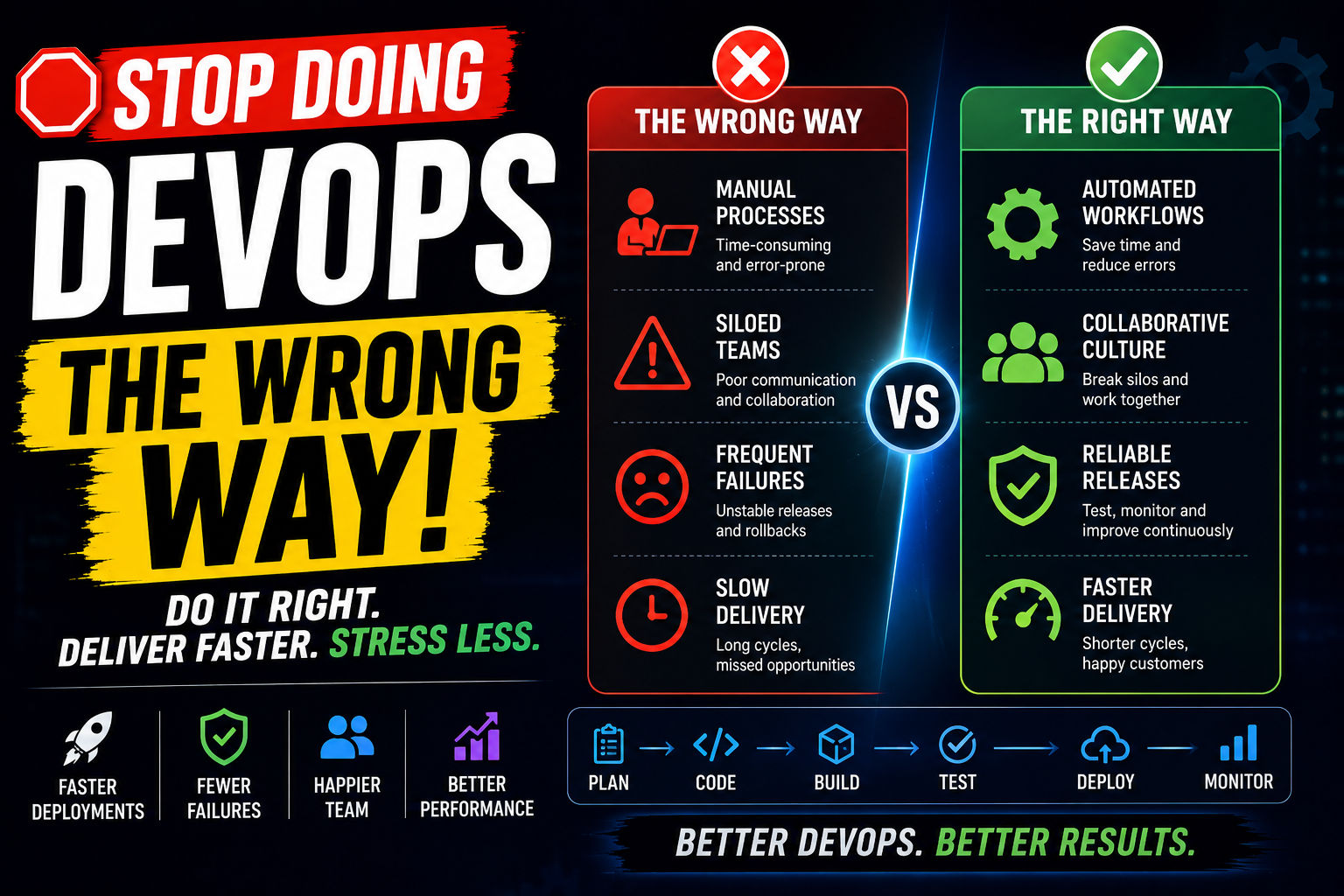
DevOps content tends to assume a certain scale: a platform team, a dedicated on-call rotation, a budget for every observability tool on the market. If you're on a three- or four-person team shipping a real product, most of that doesn't apply, and trying to adopt it wholesale is a fast way to spend more time on tooling than on your actual product. Here's a version that scales down honestly.
Start With the Boring Stuff
Before touching Kubernetes or a fancy CI pipeline, make sure the basics are solid: every change goes through version control, every deploy is triggered the same way every time, and anyone on the team can deploy without tribal knowledge locked in one person's head. This sounds obvious, but it's the single biggest gap on small teams, and it causes more outages than any missing tool.
Automate the Three Things That Actually Matter
1. Tests running on every push
You don't need a huge test suite to get value here. Even a small set of tests that catch obvious breakage, wired into your CI so they run automatically, will save you from the most common category of "it worked on my machine" incidents.
2. One-command deploys
Whatever your deploy process looks like, it should be a single command or button, not a checklist of manual steps. Manual deploy steps are where small teams lose entire afternoons to typos and forgotten steps.
3. Basic monitoring and alerting
You don't need a full observability platform on day one. A simple uptime check and an alert to a shared channel when something goes down will catch the majority of incidents that matter for a small product. Add more sophisticated tracing later, once you actually have a specific problem it would solve.
Skip These Until You Actually Need Them
- A dedicated container orchestration platform if a simpler managed hosting option already does the job. Kubernetes solves real problems, but mostly problems that show up at a scale small teams haven't reached yet.
- An elaborate branching strategy. Trunk-based development with short-lived feature branches is easier for a small team to keep consistent than a multi-stage git-flow model designed for large organizations.
- A custom internal tooling platform. Building your own deployment dashboard or internal developer platform is a project in itself. Use what your hosting provider already gives you until the gaps are actually painful.
Write Down the One Thing That Would Hurt If You Forgot It
Every small team has at least one deploy step or environment quirk that lives only in someone's head. Spend twenty minutes writing it into a shared document. This single habit prevents more outages than most monitoring tools, because the actual failure mode for small teams is usually "the one person who knew how to fix this is on vacation," not "we lacked sufficiently advanced tooling."
Final Thoughts
Good DevOps for a small team isn't a scaled-down version of what a 200-person engineering org does. It's a much smaller set of habits, kept consistent: automated tests, one-command deploys, basic alerting, and documentation that doesn't live only in one person's memory. Add complexity only when a specific, recurring problem justifies it, not because a blog post says you should already have it.