
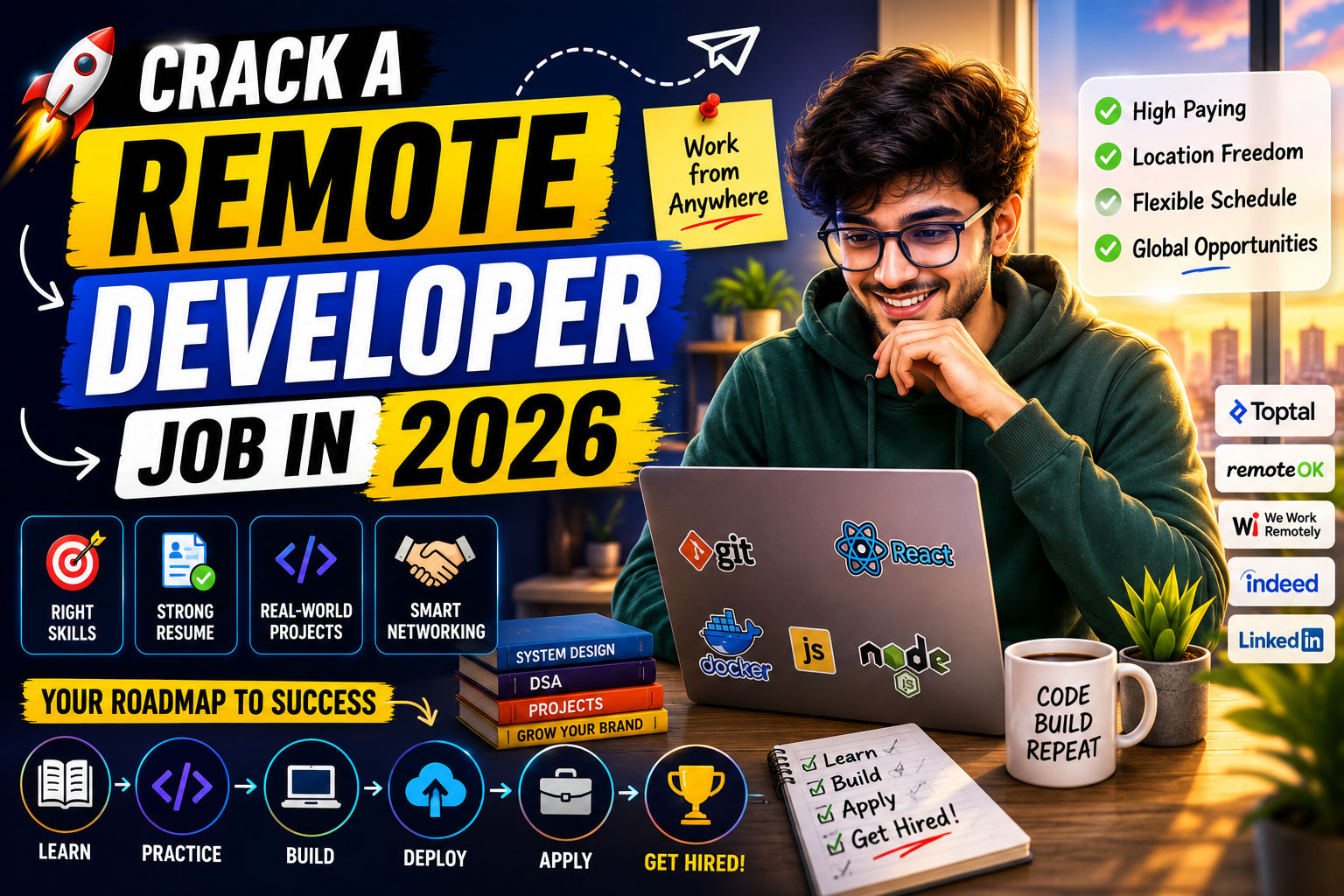
Crack a Remote Developer Job in 2026
Remote developer roles get more applicants per posting than almost any other category of remote work, which means the old advice - "just apply to a lot of places and tailor your resume a bit" - isn't enough anymore. What actually works in 2026 looks different, and a lot of it has nothing to do with the resume itself.
Your Public Work Matters More Than Your Resume
Hiring managers filtering through hundreds of applications for a remote role lean heavily on anything that lets them verify skill without a phone screen. A couple of well-documented projects on GitHub, a technical blog post that explains a real problem you solved, or contributions to an open-source project you actually use will do more for your credibility than another bullet point claiming you're "detail-oriented." If you don't have anything public yet, building one solid, well-explained project is a better use of a weekend than reformatting your resume for the tenth time.
Async Communication Skill Is Now a Screened-For Trait
Distributed teams live and die by how well people communicate without a meeting. Companies hiring remotely have gotten much more deliberate about testing this: written take-home exercises, async follow-up questions instead of a live interview, or asking candidates to explain a technical decision in writing. If you tend to explain things clearly and concisely in writing, make that visible during the process instead of assuming it'll come across naturally in a call.
Timezone Overlap Is a Real Filter, Not a Minor Detail
Many remote postings are vague about location requirements in the job title but specific about them once you reach a recruiter. Save time by asking about required overlap hours early rather than getting three interviews deep into a process that was never going to work logistically for your timezone.
Referrals Still Outperform Cold Applications
This hasn't changed, but it's easy to forget when a job board makes applying feel effortless. A short, specific message to someone who actually works at the company - referencing something concrete about their work, not a generic "I'd love to connect" - still converts at a much higher rate than an application dropped into a portal with hundreds of others.
What to Stop Doing
- Stop sending the same generic cover letter to every posting. If it doesn't reference something specific about the company or role, it reads as mass-produced, because it is.
- Stop listing every technology you've ever touched. A focused resume that matches the role's actual stack reads as more credible than a wall of buzzwords.
- Stop waiting for the "perfect" moment to apply. Most companies hiring remotely are used to iterating on job requirements as candidates come through; a strong candidate who's missing one nice-to-have is still worth a conversation.
Final Thoughts
The core advice hasn't changed as much as the tactics around it: be verifiably good at something specific, communicate clearly in writing, and get in front of real people instead of only competing in the applicant-tracking-system lottery. None of this guarantees an offer, but it meaningfully changes your odds compared to applying the way most people still do.