
Confused Between Python and JavaScript in 2026 ?
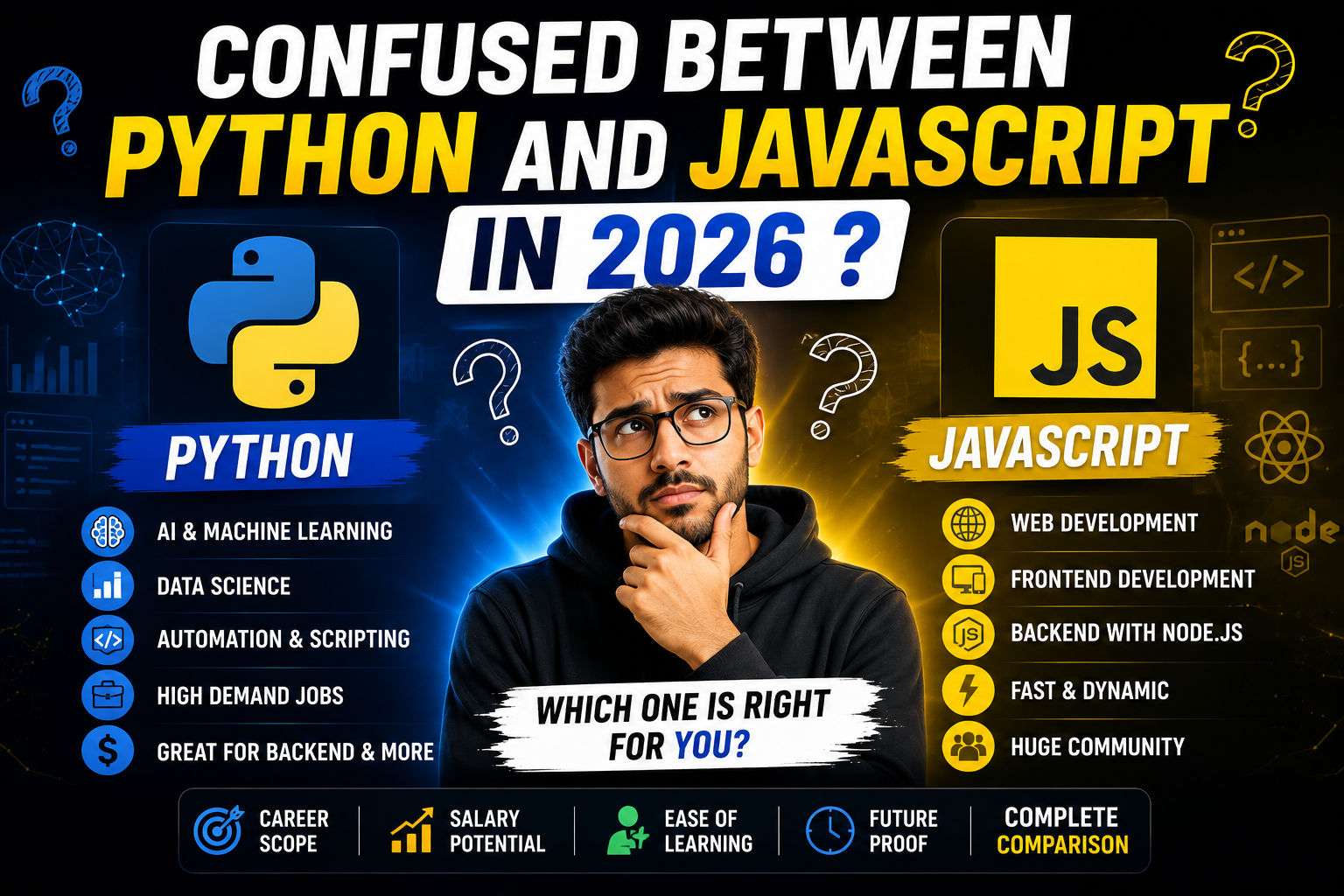

"Which language should I learn first?" is one of the most common questions new developers ask, and it usually gets answered with tribal loyalty instead of an honest answer. Python and JavaScript are both excellent starting points. They just optimize for different things, and the right choice depends on what you actually want to build in the next year, not which one is trendier on social media.
Python: Best If You Want to Get to "Useful" Fast
Python reads close to plain English, which makes the first few weeks noticeably less frustrating. It's also the default language for data analysis, automation scripts, and most machine learning work, so if your interest leans toward data, AI, research, or just automating annoying tasks on your own computer, Python gets you to something useful with the least friction.
JavaScript: Best If You Want to Build Things People Click On
JavaScript is the only language that runs natively in every browser, which means it's the fastest path to building something visual and shareable: a website, a small app, an interactive tool. If the idea of building things other people can open in a browser and immediately use is what's motivating you, JavaScript gets you there quicker, especially once you add HTML and CSS to the mix.
Where They're Roughly Equal
Job availability, community size, learning resources, and long-term career ceiling are all comparable between the two at this point. Neither is going to box you into a corner. Most professional developers end up learning both eventually anyway, so the "first" language matters less for your long-term career than it feels like it does when you're just starting out.
What AI Is Actually Changing About This Decision
It would be dishonest to write a "learn to code in 2026" post without addressing the elephant in the room: AI coding tools can now write a working function faster than a beginner can type it out. That's a real shift, and anyone telling you it isn't happening isn't being straight with you. But it's worth being precise about what's actually changing, instead of jumping straight to "learning to code is pointless now," which isn't true and isn't what's happening in hiring or in real engineering teams.
What's changing is the value of typing syntax from memory. That was always a small part of the job. What isn't changing, at least not in any 1-2 year horizon anyone can honestly predict, is the value of knowing whether the code AI produces is correct, secure, and doing the right thing for your actual problem. AI is very good at producing plausible-looking code and occasionally wrong in ways that are hard to catch if you don't understand what you're looking at. The developers who are hardest to replace right now aren't the fastest typists, they're the ones who can read a pile of AI-generated code and tell you exactly why it will break in production.
If you're starting out today, the practical takeaway isn't panic, it's a slightly different learning priority: spend real time understanding what your code does and why, not just getting it to run. Use AI tools while you learn, but treat their output the way you'd treat an answer from a classmate, something to check, not something to trust automatically. That habit is worth more in two years than memorizing syntax ever was.
The Actual Answer
Pick Python if you're drawn to data, automation, or AI/ML. Pick JavaScript if you want to build things you can put in front of people in a browser. Either choice is a reasonable start, and neither one is a wrong turn. What matters more than the language is whether you keep building small, real things with it instead of stopping after the tutorials.