
Why You're Still Not Ranking on Google
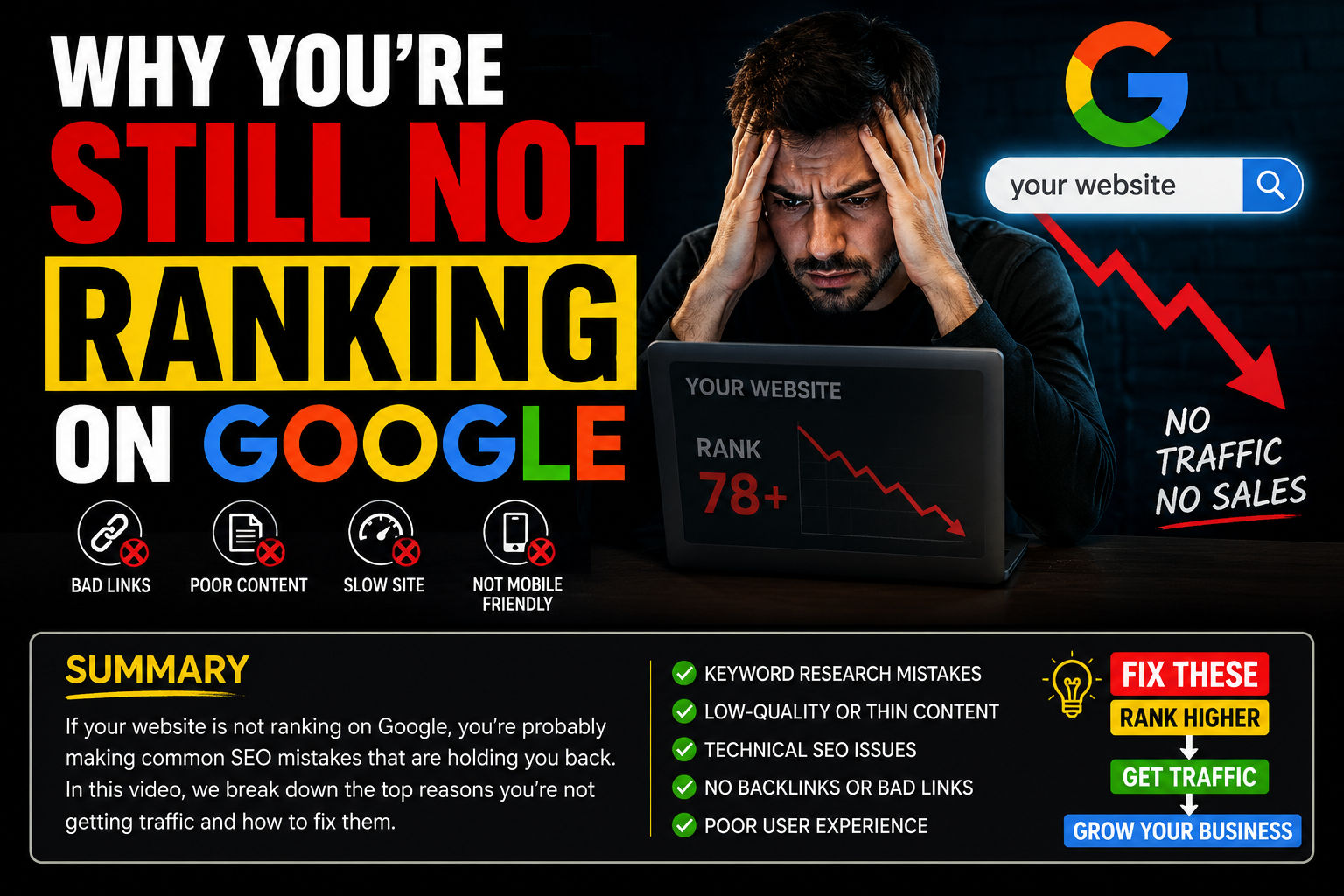
The Real Reasons Most Websites Fail
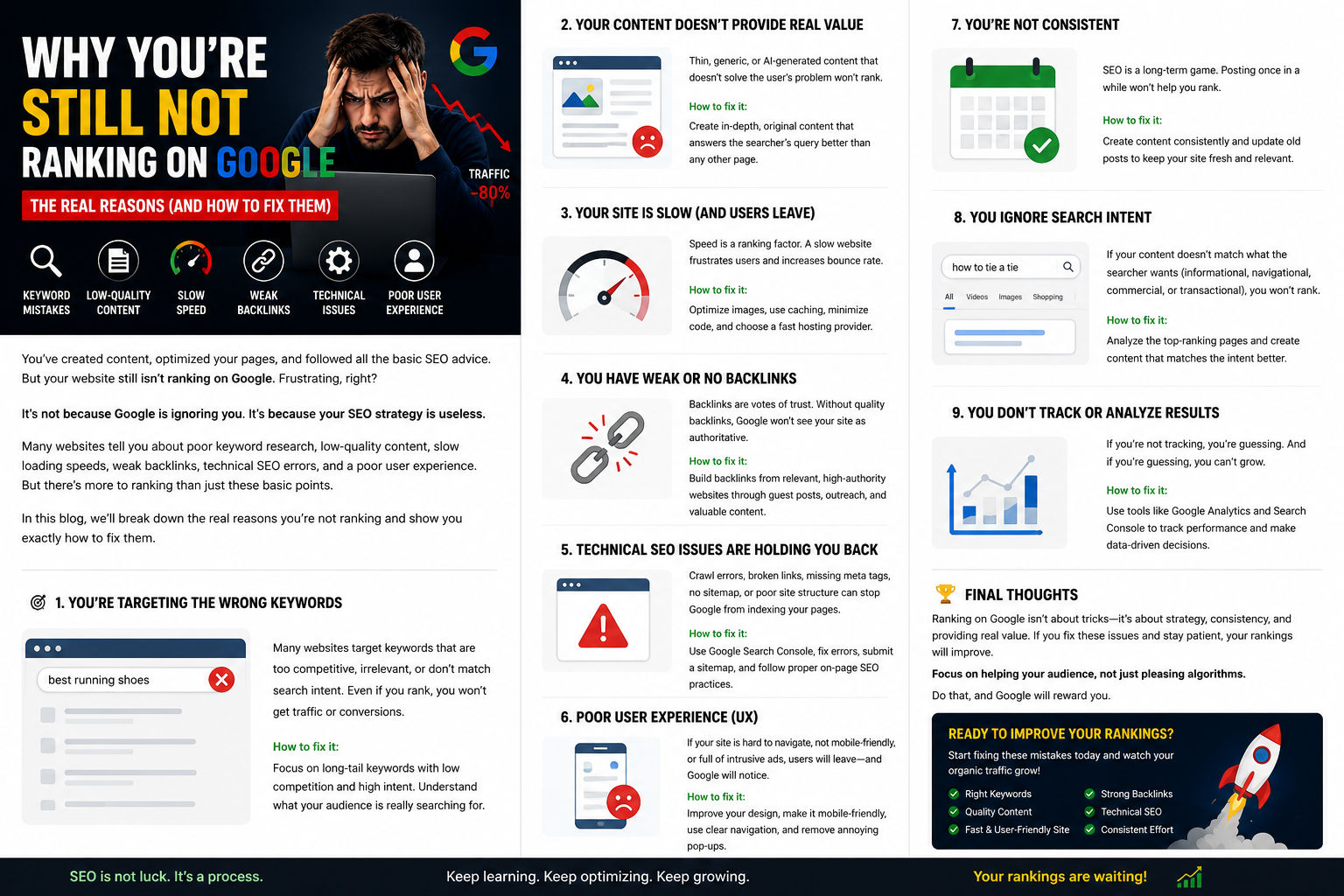
If you've spent weeks or even months creating content, optimizing your website, and following SEO tutorials, you Noting Do.
Why website is not ranking on Google 😰?
Google is Not ignoring your website. It's because Your SEO strategy isn't helping Google understand That Your Content deserves to Rank ?
1000 of websites publish new articles every day, but only a small percentage ever reach Google's first page. The difference. It Not the luck it's strategy To Rank.
- In This Guide, You How to Make The strategy To Rank
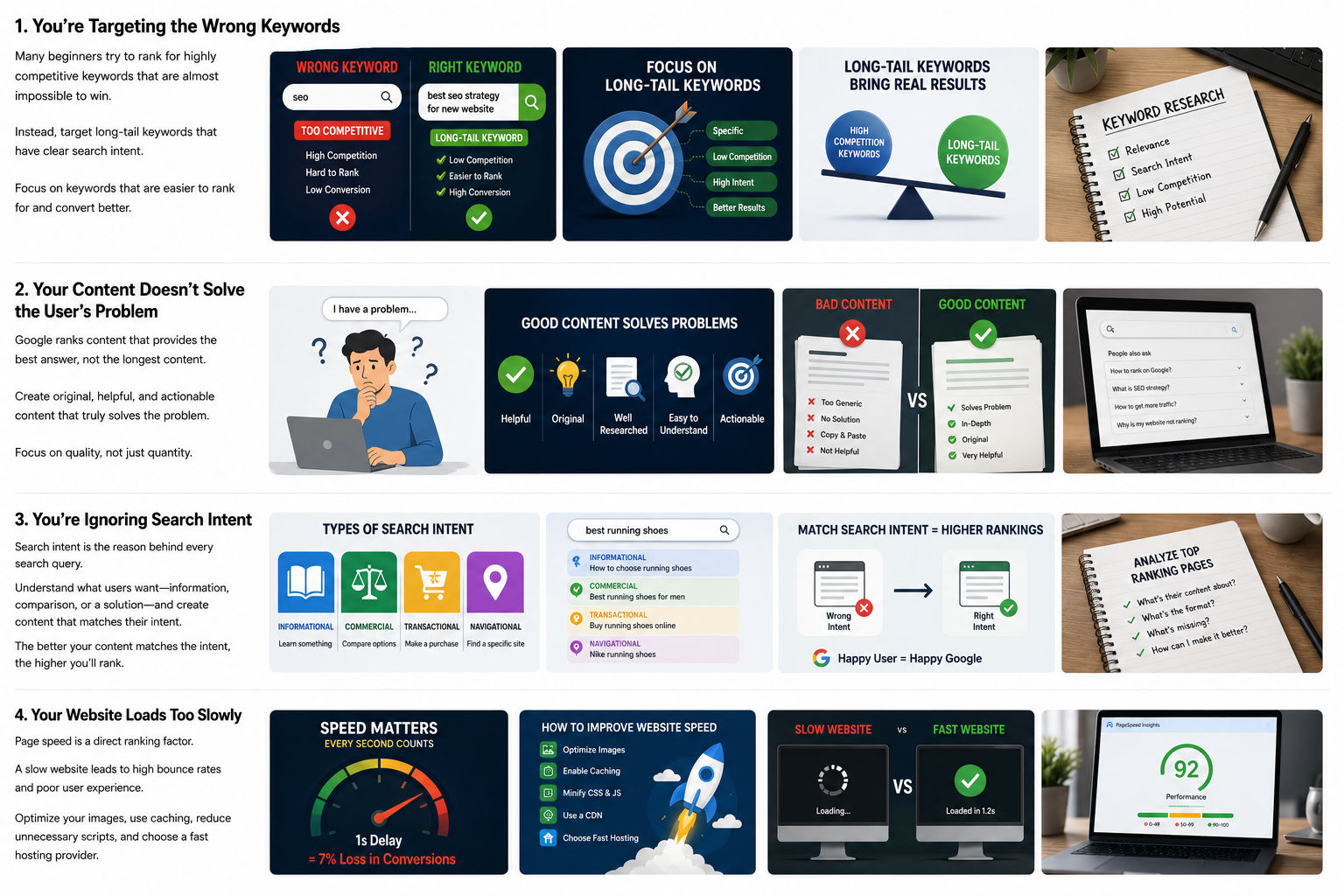
1.Your Targeting the Different Keywords
Many beginners do this to Rank Find keywords such as Trending , viral etc..
Best laptop
SEO
Web hosting
AI tools
Instead, target Your Content Keywords And Find
Long-tail keywords are easier to rank for and usually convert better because they match what users are actually searching for.
2. Solve The Users Problems
Google doesn't rank articles because they're long.
It ranks articles because they provide the best answer.
Ask yourself
Does this article solve a real problem?
Is it better than the top 10 results?
Would someone bookmark or share it?
If the answer is no, Google has little reason to rank it.
Focus on creating content that is.
Helpful
Original
Well researched
Easy to understand
Actionable
3. Ignoring Search Intent
Search intent is the biggest ranking factors.
if someone searches.
"Best budget smartphones"
They want a comparison not a history of smartphones.
Every keyword has an intent.
Informational
Commercial
Transactional
Navigational
Study the first page results before writing your content. Build an article that matches what users expect.
4. Website Loads Too Slowly
A slow website increases bounce rates and creates a poor user experience.
Improve your website by
Compressing images
Using modern image formats like WebP
Enabling browser caching
Minifying CSS and JavaScript
Choosing a fast hosting provider
Using a CDN
Even a one-second improvement can increase engagement and conversions.
5. Mobile-Friendly
More than half of Google searches happen on mobile devices.
If your website looks broken on a phone, users leave and Google notices.
Make sure your website has
Responsive design
Readable font sizes
Fast mobile loading
Easy navigation
Large tap targets
Always test your pages on multiple screen sizes.
6. Technical SEO Is Weak
Great content alone isn't enough.
Google also needs to crawl and understand your website.
Check for
Broken links
Missing title tags
Duplicate pages
Incorrect canonical tags
Missing XML sitemap
Robots.txt errors
Crawl issues
Structured data problems
Use Google Search Console regularly to monitor indexing and fix technical issues.
7. Few or No Quality Backlinks
Backlinks remain one of Google's strongest ranking signals.
Not All backlinks Are equal.
A few links from trusted, relevant websites are often more valuable than hundreds of low-quality links.
Ways to earn backlinks.
Publish original research
Create free tools
Write guest posts
Build useful resources
Share unique case studies
Avoid buying spammy backlinks they can do more harm than good.
8. Low Topical Authority
Publishing one article about SEO doesn't make your site an SEO authority.
Google prefers websites that cover an entire topic.
Instead of writing
One SEO article
Create a complete content hub
SEO Basics
Keyword Research
On-Page SEO
Technical SEO
Link Building
Local SEO
AI SEO
SEO Tools
Google Search Console Guide
When your articles link to each other naturally, Google gains more confidence in your expertise.
9. You're Publishing Inconsistently
SEO rewards consistency.
Publishing one article today and another three months later rarely builds momentum.
Create a realistic publishing schedule.
For example.
2–3 quality articles every week
Update older articles regularly
Refresh statistics and screenshots
Add new internal links
Consistency signals that your website is active and maintained.
10. Not Tracking Your SEO Performance
Many website owners publish content and hope for the best.
Instead, measure what works.
Track
Organic traffic
Keyword rankings
Click-through rate (CTR)
Bounce rate
Indexed pages
Core Web Vitals
Conversions
Data helps you improve faster than guesswork.
11. Ignoring Internal Linking
Internal links help Google discover your pages and understand your site's structure.
A good internal linking strategy:
Connects related articles
Passes authority across your site
Keeps visitors engaged longer
Improves crawlability
Every new article should naturally link to relevant existing content.
12. Expecting Results Too Quickly
SEO isn't a shortcut.
A brand-new website usually takes several months to build trust and authority.
Instead of chasing quick wins, focus on:
Creating valuable content
Improving user experience
Building authority
Fixing technical issues
Publishing consistently
Patience combined with quality work almost always outperforms shortcuts.
If your website isn't ranking on Google, don't assume the search engine is ignoring you.
In most cases, the problem lies in the strategy not the algorithm.
Successful SEO isn't about tricks or hacks. It's about understanding what users want, creating genuinely useful content, maintaining a technically sound website, and consistently improving over time.
Start by fixing one issue at a time. As your content quality, technical SEO, authority, and user experience improve, your rankings will follow.
Remember: Google's goal is to deliver the best answer to every search. Make your website that answer, and you'll give yourself the best chance to earn higher rankings and long-term organic traffic.